

You are currently sitting still, perhaps holding a phone or leaning against a desk. But don’t let your senses fool you—stillness is a cosmic illusion. In reality, you are a passenger on a multi-layered journey through the cosmos, moving at speeds that defy human intuition.
If you’ve ever wondered how fast are we moving through space, the answer depends entirely on your frame of reference. From the spin of our planet to the mysterious bulk flow of local galaxies, let’s break down our true speed in the universe.
1. The Local Spin: How Fast is the Earth Spinning?
Our journey begins at home. Even when you are “stationary,” you are tethered to a planet that never stops rotating.
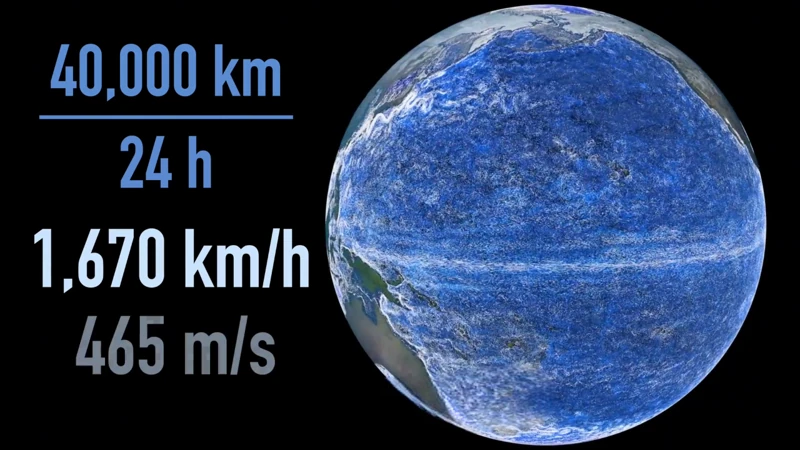
At the equator, the Earth rotation speed is approximately 1,670 km/h (about 465 meters per second). That is faster than the speed of sound. You might ask: “If we are moving that fast, why don’t we feel a sonic boom?” The reason is simple—the atmosphere moves with us. Relative to the air around you, your speed is zero.
2. The Yearly Lap: Earth Orbit Speed Around the Sun
The rotation of the Earth is just a fraction of our total velocity. Our planet is also hurtling through the solar system.
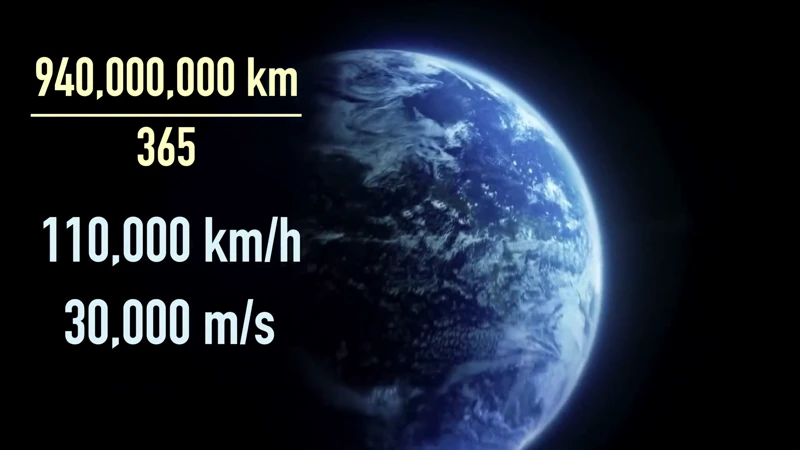
The Earth orbit speed around the Sun is a staggering 107,000 km/h (about 30 km/s). To put that in perspective, in the time it takes you to take a single breath, the Earth has traveled nearly 150 kilometers along its orbital path.
3. The Galactic Carousel: Solar System Speed Around the Milky Way
The Sun isn’t a fixed anchor, either. It is one of billions of stars caught in the grand Milky Way rotation.
Our entire neighborhood is swirling around the supermassive black hole at the center of our galaxy. The Sun orbiting Milky Way center speed is roughly 828,000 km/h (230 km/s).
This journey is so vast that it takes approximately 230 million years to complete a single lap. This duration is known as a galactic year length. The last time the Solar System was in this exact spot, the first dinosaurs were just beginning to appear on Earth.
4. The Cosmic Scale: Velocity Relative to the Universe
Once we look beyond our galaxy, we need a universal “benchmark” to measure our speed. Astronomers use the cosmic microwave background velocity measurement (CMB) to find our “absolute” speed. The CMB is the faint afterglow of the Big Bang that fills all of space.
By measuring the Doppler shift in this radiation, scientists have determined our velocity relative to the universe.
- The Result: Our Solar System is moving at approximately 370 kilometers per second relative to the CMB.
5. The Great Attractor and the Bulk Flow of Local Galaxies
Why are we moving so fast? Gravity is the culprit. We aren’t just drifting; we are being pulled.
Our galaxy and dozens of others are being dragged toward a region of space known as the Great Attractor. This gravitational anomaly is a massive concentration of matter that influences Great Attractor galaxy motion across hundreds of millions of light-years.
However, recent studies have uncovered a mystery. When we measure our speed by “counting” distant radio galaxies, the numbers are much higher than the CMB measurements suggest. This indicates a bulk flow of local galaxies—a phenomenon where an entire “neighborhood” of the universe is moving toward an unknown, even more distant mass.
Summary Table: Our Multi-Layered Speed
| Motion Type | Estimated Speed | Reference Point |
| Earth Rotation | 1,670 km/h | Earth’s Axis |
| Earth Orbit | 107,000 km/h | The Sun |
| Solar System Orbit | 828,000 km/h | Galactic Center |
| Cosmic Movement | 1.3 Million km/h | CMB (Universe Background) |
Conclusion: Constant Motion in a Vast Universe
The next time you feel like you haven’t accomplished much in a day, remember that you have actually traveled millions of kilometers through the void. From the Earth rotation speed to our rush toward the Great Attractor, we are part of a grand, high-speed celestial dance.
The fact that we can measure these speeds from a small blue rock is a testament to human curiosity. As our technology improves, we may finally solve the mystery of the “bulk flow” and discover what is truly pulling us through the dark.
What do you find more mind-blowing: the speed of our planet or the fact that we can’t feel it? Let me know in the comments!
Further Reading: If Your Friend Fell Into a Black Hole, Would the Spaceship Speed Up or Slow Down?