

Bermuda is a small island in the Atlantic Ocean with a population of less than 100,000, located over 10,000 kilometers away from Beijing. Logically speaking, this place should have little to do with our daily lives. However, when the name “Bermuda” comes up, there are probably very few young people today who haven’t heard of it.
In the extracurricular books we grew up reading, the concept of the “Bermuda Triangle” made frequent appearances. The so-called “Devil’s Triangle” generally refers to the triangular area formed by connecting Bermuda, Miami, and San Juan, the capital of Puerto Rico. According to legend, this region is notorious for mysterious phenomena—planes and ships that enter often meet with misfortune and rarely make it out.
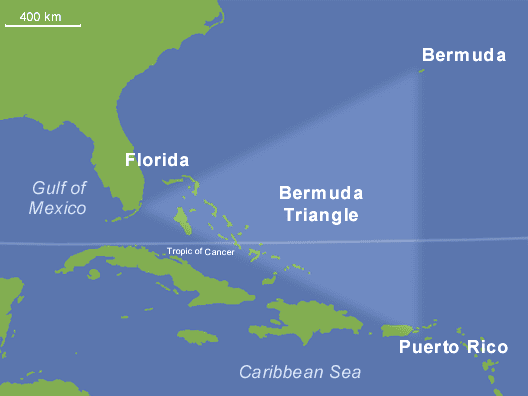
Some theories claim that the Bermuda Triangle contains a time-space tunnel capable of transporting planes to unknown worlds, causing passengers to vanish without a trace. Others even link the Triangle to the myth of Atlantis or extraterrestrials, speculating that those who disappeared were taken by mysterious forces.
These paranormal tales are undeniably captivating—enough to inspire several sci-fi blockbusters. But don’t be fooled. In reality, Bermuda is not some terrifying forbidden zone, nor does it hide the time tunnel of your imagination. Most of the stories about it are the result of fabricated or distorted facts. The so-called “Devil’s Triangle” is not a natural phenomenon at all, but rather a pop culture creation born of human imagination.
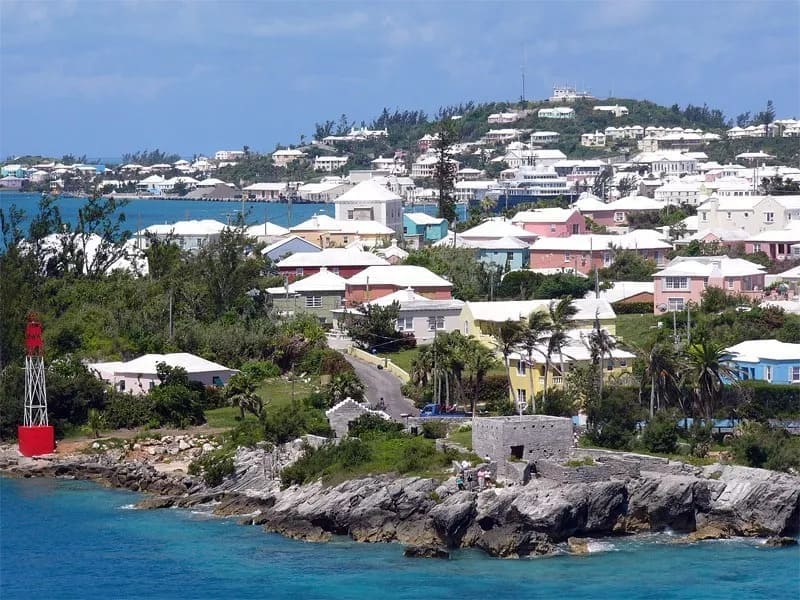
In reality, Bermuda is a peaceful paradise and a renowned tourist destination.
How Terrifying Is the Devil’s Bermuda Triangle, Really?
The mysterious events of the Bermuda Triangle may sound baffling, but they generally fall into two categories: either shipwrecks or aircraft disappearances. But when it comes to the actual number of ships and planes the so-called Devil’s Triangle has “swallowed,” even books and articles on the subject can’t provide a definitive figure. Some enthusiasts have estimated over 900 transportation incidents in the region over the past 200 years—but this number is likely exaggerated1. In truth, proponents of the Bermuda Triangle myth have never relied on overwhelming statistics to grab attention. Instead, they focus on strange, puzzling individual cases.
Among the shipwreck stories, the ones most often cited to illustrate the Triangle’s supposed danger involve disappearing warships and “ghost ships” (vessels found adrift without any crew). Two of the most iconic examples are the USS Cyclops and the Carroll A. Deering. The Cyclops was a U.S. Navy cargo ship carrying over 300 people, with a displacement of nearly 20,000 tons. In March 1918, it departed fully loaded with manganese ore—only to vanish without a trace while passing through the Bermuda Triangle2. A massive steel ship, roughly the size of a light aircraft carrier, simply disappeared—no debris, no distress signal, no survivors. That kind of disappearance is understandably bewildering.
- Many such statistics are based on unverified or selective sources.
- The Cyclops case remains officially unsolved, though various rational explanations have been proposed over time.
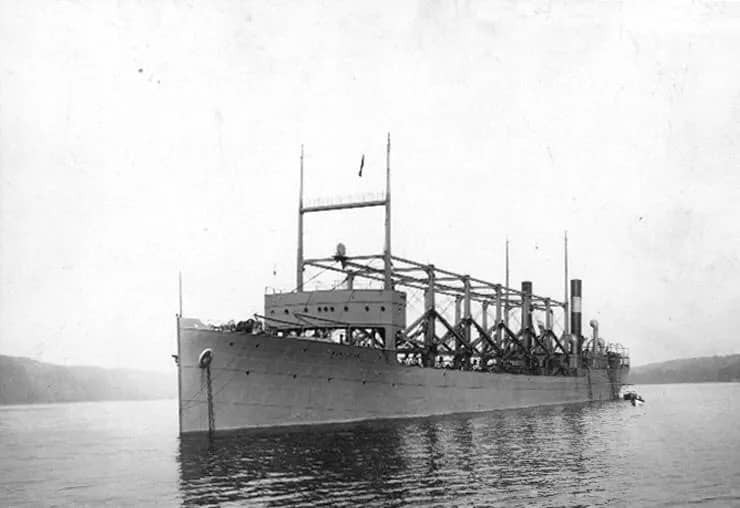
Historic Image of the USS Cyclops Transport Ship
In contrast, the story of the ghost ship Carroll A. Deering is described as even more eerie. This multi-masted schooner was built in 1919 and typically transported cargo in the waters near Bermuda. Yet, just two years after its launch, the ship mysteriously vanished. It wasn’t until 1921 that the vessel was found off the coast of North Carolina, completely intact—except that not a single person remained on board.
Similarly, the disappearance of military aircraft is also widely known. In December 1945, five bomber planes went out on a training mission and lost radio contact near the Bermuda area. The Navy soon dispatched a seaplane to search for them, but that rescue aircraft also vanished shortly afterward. In total, six planes and 27 crew members went missing on that single day.
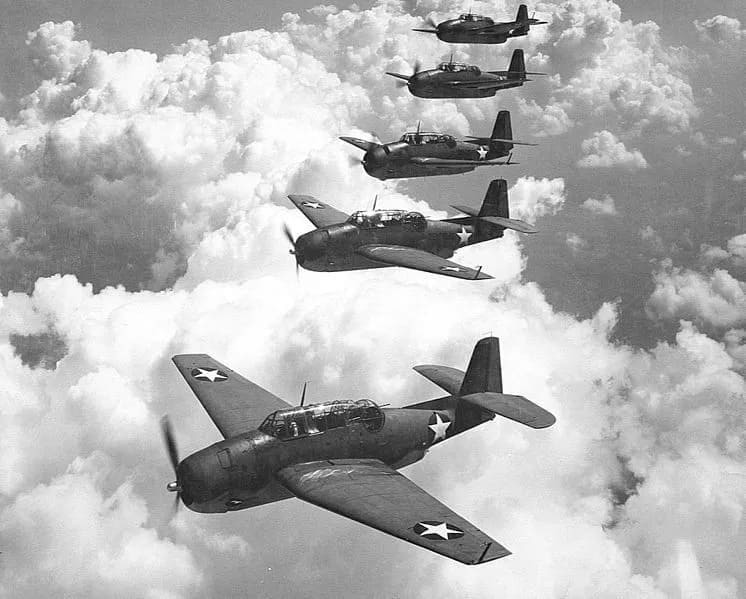
Historic Image of the Lost Navy Bomber
Besides these classic cases, there are many other paranormal stories about the Bermuda Triangle, but their narratives are quite similar—mostly involving various types of vehicles mysteriously disappearing after entering the area. At first glance, Bermuda does seem eerie, and it has implanted the idea in people’s minds that “the Bermuda Triangle is extremely dangerous, and these disappearances defy common sense and scientific explanation, requiring concepts like time-space tunnels or aliens to make sense.” However, this belief is completely wrong from start to finish. Bermuda is not dangerous; the transportation accidents there can be fully explained by science, and linking them to time tunnels or UFOs is utterly baseless.
The World’s Most Dangerous Waters—But Bermuda Doesn’t Even Make the Top Ten?
First of all, one thing is certain: most of the transportation accidents linked to the Devil’s Triangle did indeed occur, while a small number were outright fabricated, as confirmed by contemporary newspaper reports. However, these incidents have been greatly exaggerated, and some important details were deliberately omitted.
Objectively speaking, military ship and aircraft accidents are unfortunate but quite common. For instance, in just the past two years, our South Asian neighbors have experienced almost monthly military plane crashes, with over 30 naval accidents occurring in the last decade. Globally, news of military ship and submarine accidents appears frequently.
Back in the early 19th century through the first half of the 20th century—before GPS existed, computers were not widely used, airplanes still relied on propellers, and weather forecasts were mostly guesses—aircraft and ship accidents in the Bermuda Triangle region were nothing extraordinary.
Moreover, the World Wildlife Fund has ranked the world’s most accident-prone shipping areas, and the regions most prone to incidents include the Sea of Japan, the Mediterranean, and the Persian Gulf. Bermuda doesn’t even make the top ten!
Additionally, when ships or planes crash in the vast ocean, locating their wreckage is truly like “finding a needle in a haystack.” This makes it very difficult to trace them, easily creating the illusion that they “disappear without a trace.”
As for so-called ghost ships, they are actually quite common. According to Asahi Shimbun, over 100 ghost ships drifted to the Japanese coast alone in 2017. The owners of these vessels may have perished at sea, with their bodies swept away by the waves. Alternatively, some ships might have been left unattended at docks, only to break free when their mooring lines snapped and drifted out to sea. Many ghost ships found in the Bermuda Triangle area likely appeared in similar ways.
Also, as mentioned earlier, eyewitnesses at the time believed the Carroll A. Deering was attacked by pirates, with the crew either fleeing or being killed—explaining why the ship was found completely abandoned.
In addition, a pilot and library science master’s graduate named Larry Kusche wrote a book specifically to expose the truth about Bermuda. Drawing from his own flying experience and thorough research, he discovered that all previous paranormal stories about ship and plane disappearances conveniently omitted a crucial detail: the weather.
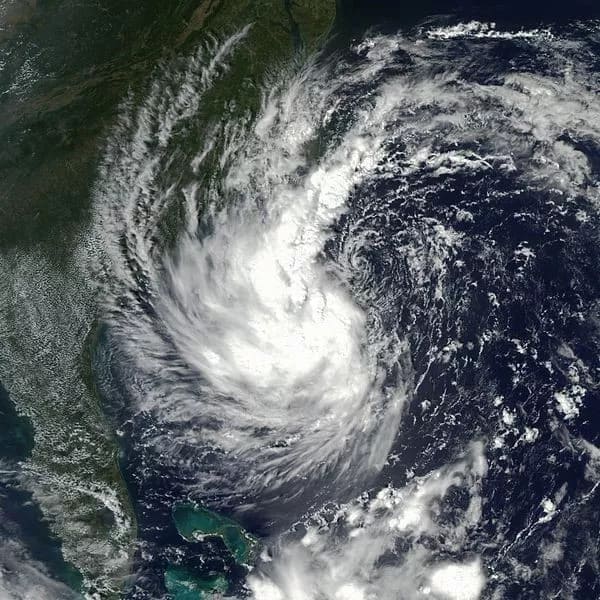
Hurricanes in the waters near Bermuda.
The waters near Bermuda frequently experience hurricanes or thunderstorms, posing a significant threat to maritime traffic. For example, the accident report for the USS Cyclops mentioned that the ship likely sank during a storm with winds reaching 50–70 km/h. Moreover, many ship and flight disappearances in the area occurred on days with severe weather conditions. However, devoted fans of the Devil’s Triangle often deliberately omit any mention of the weather to enhance the mysterious aura of these incidents. After all, if these disappearances were simply the result of bad weather, they probably wouldn’t attract as much attention.
A Pop Culture Frenzy
Overall, the transportation accidents near Bermuda cannot be considered paranormal events—they can be fully explained by science. The so-called Bermuda Devil’s Triangle is neither a natural phenomenon nor a scientific discovery.
But if you ask whether the Bermuda Devil’s Triangle exists, the answer should be: yes, it does—but not in nature. It exists as a fictional cultural phenomenon in human books, television, the internet, and minds.
The concept of the Bermuda Devil’s Triangle has been a cultural product since its inception. Its originator, Vincent Gaddis, was not the scientist many imagine him to be, but a writer. In 1964, he published an article titled “The Deadly Bermuda Triangle” in Argosy magazine. The key point is that this magazine was actually a popular culture publication, mostly featuring fictional stories—similar to the well-known Chinese magazine Gushihui (Story Collection). Before it was renamed Argosy, the magazine was called Golden Ship, and it was positioned as a children’s literature magazine, akin to the Tonghua Dawang (Fairy Tale King) we read as kids.
Now imagine: if someone published an article in Gushihui or Tonghua Dawang about frequent paranormal events in a certain place, would you think it was fiction or a real event?
So it turns out the Bermuda Triangle was originally a literary creation, with nothing to do with natural science research. However, the concept captured people’s attention because the area was a hotspot in the last century. To the west lies the famous tourist destination Florida; to the south, Cuba—the frontline of Cold War tensions; and in the middle, a crucial Atlantic trade route.
Timing-wise, it coincided perfectly with the UFO craze of the 1960s and ’70s. Combining four major hot topics at once, it was almost impossible for the Bermuda Triangle not to become famous. Suddenly, magazines, TV shows, B-movies, and cultural merchandise related to the Bermuda Triangle flooded the market. Renowned director Steven Spielberg was even inspired to make the sci-fi blockbuster Close Encounters of the Third Kind.
Over time, the Bermuda Triangle myth became a shared “collective memory” for many people born in the ’80s and ’90s.
From this perspective, although the Bermuda Triangle is fictional, it has certainly added a lot of excitement to people’s cultural lives and even inspired many young people around us to pursue scientific research. However, no matter what, we should restore Bermuda to its true image rather than the sensationalized illusion created to grab attention.