

This monument has puzzled scientists for centuries. But now, experts may have finally solved one of Stonehenge’s greatest mysteries. Researchers have revisited the long-standing debate over the origins of the iconic bluestones found at the site on Salisbury Plain in Wiltshire.
They focused on a football-sized rock known as the “Newall Stone,” discovered during excavations a century ago. A central question has been whether this stone—and others like it—was transported to the site by glaciers from Wales or carried there by humans over 5,000 years ago.
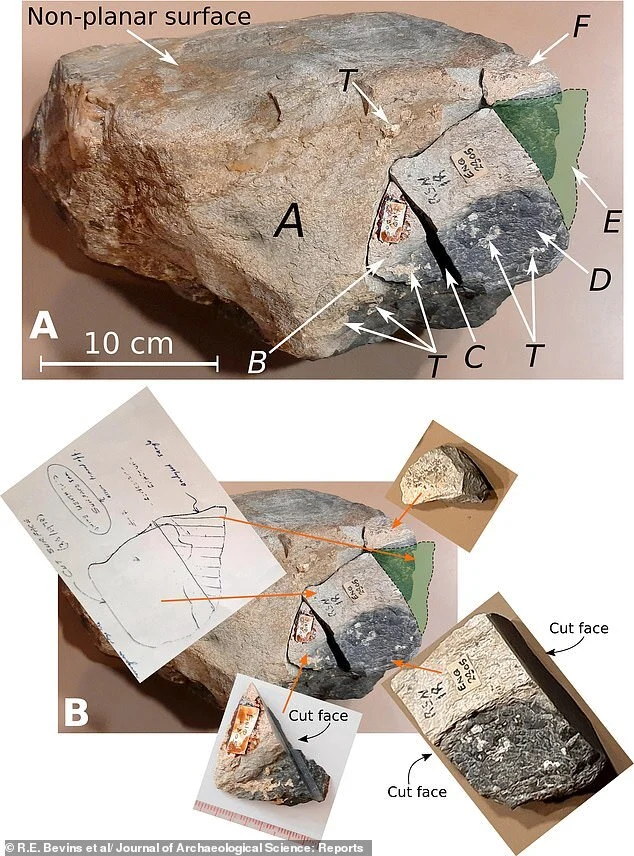
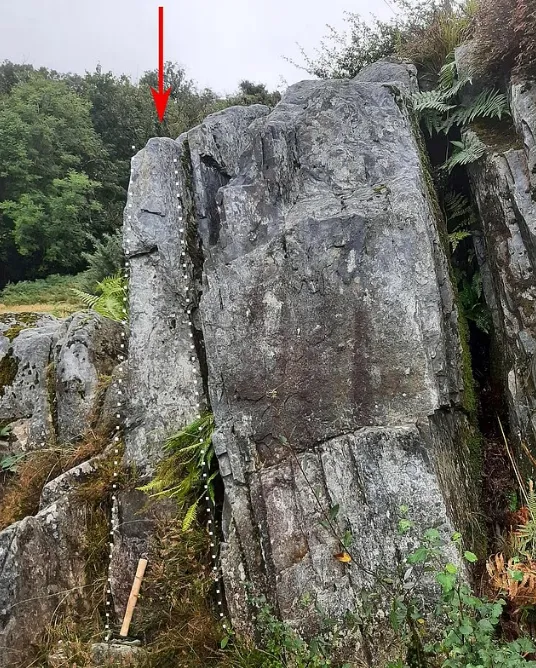
A team led by Professor Richard Bevins from Aberystwyth University compared the Newall Stone with samples from a rock outcrop in Wales.
Through geochemical and microscopic analysis, they concluded: “There is no evidence to support the glacial erratic theory.” Instead, the stone’s unique features matched perfectly with rocks from Craig Rhos-y-felin, suggesting that humans transported the multi-ton bluestones from nearly 200 kilometers (125 miles) away.
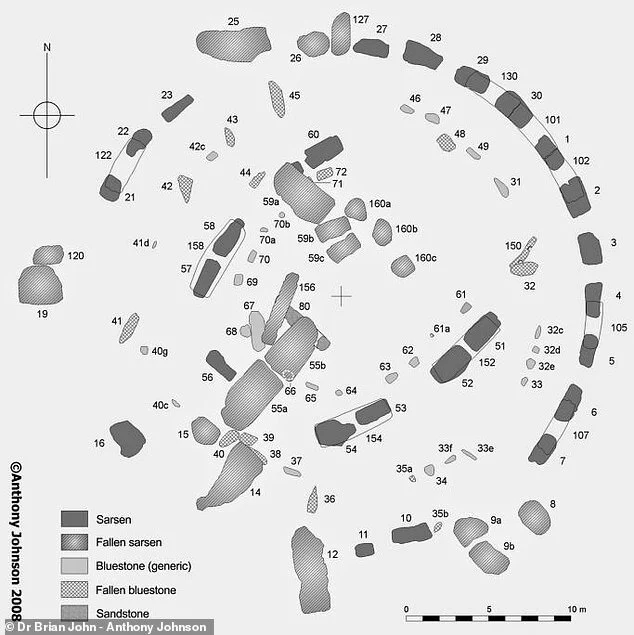
They explained that there is already evidence Neolithic communities were quarrying at this Welsh site around 3000 BCE. Chemical analysis showed that the Newall Stone and other fragments found at Stonehenge contained the same levels of thorium and zirconium as those from Craig Rhos-y-felin.
Researchers described the Newall Stone as a foliated rhyolite, with a surface layer rich in calcium carbonate—a result of being buried in Stonehenge’s calcium-rich soil for thousands of years. They argued this further supports human transport, not glacial, since glacial movement would have left similar rocks scattered across the area, which has not been observed.
The study, published in the journal Archaeological Science: Reports, also made a significant discovery about another buried stone at Stonehenge—Stone 32d. Once believed to be a spotted dolerite, new analysis confirmed it is also a foliated rhyolite, just like the Newall Stone.
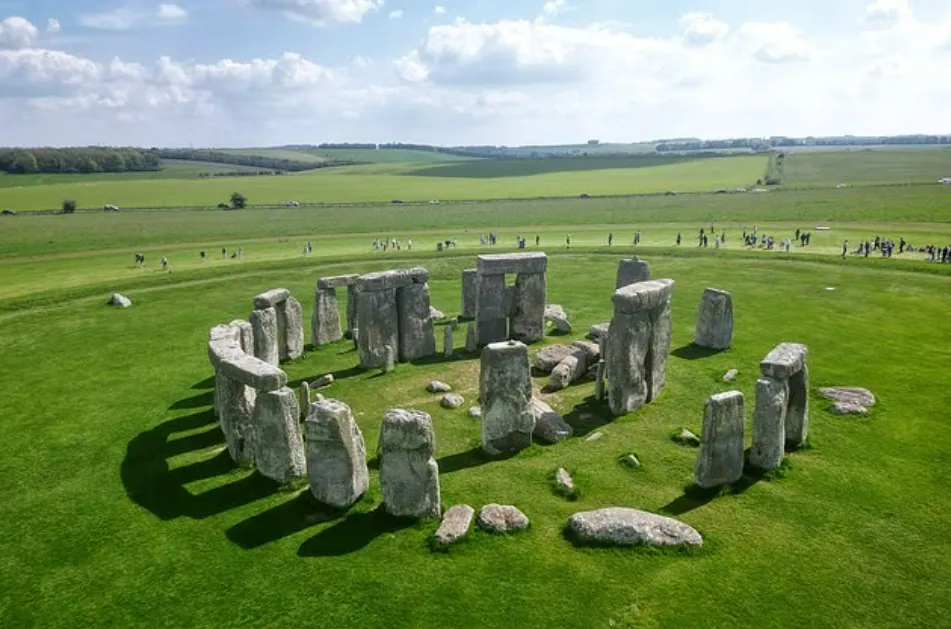
Transporting stones weighing over 3 tonnes from Wales to Stonehenge represents a staggering feat of human logistics. The researchers wrote:
“One of the fascinations of Stonehenge lies in the fact that, unlike the larger and more locally sourced sarsens, many of the bluestones have been proven to come from over 200 km away in west Wales.”
“Most archaeologists believe this extraordinary feat was achieved by Neolithic people who moved stones weighing up to 3.5 tonnes.”
“However, some have argued the opposite—that no human effort was involved.”
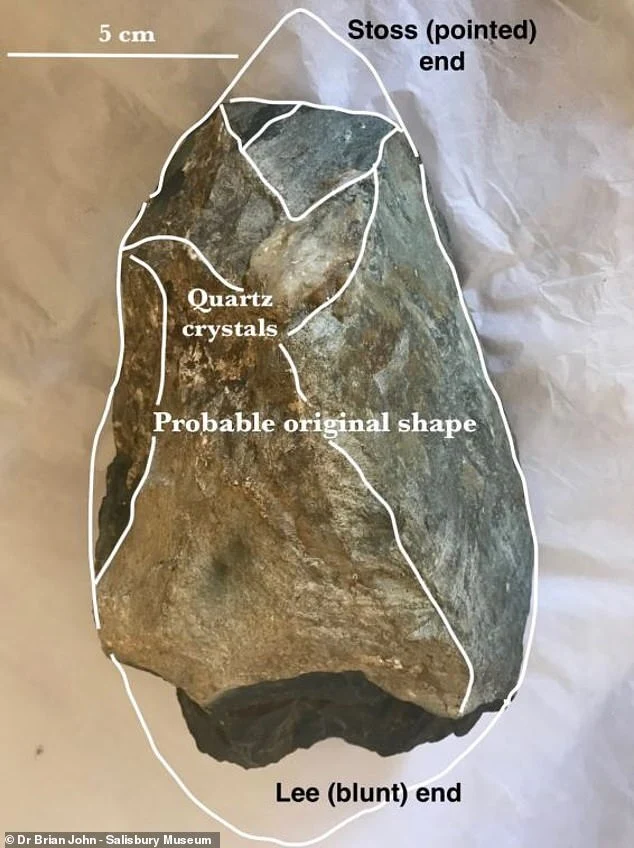
“Instead, they propose that Welsh stones were transported by glacial action long before Stonehenge was built.” One of the main proponents of the glacial theory, geologist Dr. Brian John, has long claimed that glacial striations are visible on the Newall Stone.
In one of his previous studies, he concluded:
“The stone was reduced in size and heavily abraded during glacial transport, spending much of its journey at the base of a glacier.”
“It was eventually deposited somewhere on or near Salisbury Plain.”
As part of the new research, scientists argue that these features could also be attributed to natural weathering. They also point out that even if the stone had once been moved by ice, it still does not explain why fragments of similar composition are found only at Stonehenge and not scattered more widely across Salisbury Plain.
In their article, the researchers wrote that Dr. John’s hypothesis “lacks evidential support” and added:
“Presenting it as fact rather than speculation is misleading.”
“The very existence of Stonehenge is evidence that Neolithic people were capable of moving stones weighing up to 40 tonnes,” they argued.
“Unless one believes that all of the stones just happened to be lying around ready to be stood up, they must have been moved into place.”
“If Neolithic people could move a stone tens of meters, they could move it tens or even hundreds of kilometers. It may not have been easy—but it was entirely possible, and moving 2–3 tonne bluestones would have required far less effort than transporting the sarsens.”
While the large sarsens were brought from West Woods in Wiltshire, about 32 kilometers away, each of them weighs over 20 tonnes and can stand up to 7 meters tall.
A study published last year even suggested that the famous Altar Stone may have been brought from as far as Scotland, around 750 kilometers (466 miles) away.
“There is no direct evidence for how the stones were moved,” the researchers noted, “but recent Indigenous communities have transported multi-tonne stones over long distances using ropes, wooden sledges, and tracks—technologies that were also available in the Neolithic.”
The team emphasized that, although Neolithic builders usually constructed stone circles with whatever materials were at hand, Stonehenge is unique because it was built entirely from stones brought in from afar.
They had previously proposed that the monument may have served both political and spiritual purposes—“a moment of unity among the peoples of Britain, celebrating their eternal connection with ancestors and the cosmos.”
While this new research presents compelling evidence for human transport, the ultimate questions of why and how Stonehenge was built still remain.
The team concluded:
“We reaffirm our earlier interpretation that the Newall Stone is not a glacial erratic, that there is no evidence of glacial activity on Salisbury Plain, and that the bluestones were transported by humans—not by glaciers—to Stonehenge.”